

Duration: 08 Nights & 09 Days
Routing: Delhi - Corbett - Agra – Jaipur - Delhi
| Tour Highlights | |
| Corbett | Tiger & Jeep Safari |
| Agra | Taj Mahal, Agra Fort & Sikandra |
| Delhi | Raj Ghat, India Gate, President's House, Humayun's Tomb & Qutub Minar |
Day 01: Arrive Delhi
Arrive by international flight. After a traditional ‘Swagat’ (Welcome), our representative will assist you at the airport and transfer you to the hotel for check-in.
Delhi is a bustling metropolis that beautifully blends the ancient and the modern. Its strategic location made it the seat of power for several dynasties. Mythological cities such as Indraprastha from the epic Mahabharata are believed to have stood here around 5000 BC. Over centuries, rulers such as Qutub-ud-din Aibak, Alauddin Khilji, the Tughlaqs, Humayun, and Shah Jahan built magnificent monuments, including the Walled City of Shahjahanabad.
In the early 20th century, much of New Delhi was designed by Sir Edwin Lutyens, who created a grand administrative capital as a symbol of British rule. The contrast between Old Delhi and New Delhi also reflects the contrast in lifestyle and architecture.
Afternoon tour of New Delhi: Visit Raj Ghat, the memorial to Mahatma Gandhi, marked by a simple black marble platform. Drive past India Gate, built in 1931 to commemorate Indian soldiers who died in World War I and the Afghan Wars, with the names of fallen soldiers engraved on its walls. Continue to President's House, built in 1931 and formerly known as the Viceroy’s House. Visit Humayun’s Tomb (1562), a UNESCO World Heritage Site and the first major example of Mughal architecture in India. Finally, explore Qutub Minar (1206), the tallest brick minaret in the world and a masterpiece of Indo-Islamic architecture, also listed as a UNESCO World Heritage Site.
Overnight Hotel – Delhi (B)
Day 02: Delhi – Corbett (295 km – 06 hr)
Drive to Corbett National Park, named after the legendary hunter-naturalist Jim Corbett. Spread over an area of 1300 sq km in the Himalayan foothills, Corbett is famous for its rich wildlife, particularly tigers, leopards, and elephants. Established in 1936 as Hailey National Park, it is India’s first national park and the first sanctuary under Project Tiger. Its varied vegetation provides ideal habitats for numerous species.
In the evening, enjoy a nature walk around the park outskirts, followed by a briefing on the forest and its wildlife.
Overnight Wildlife Resort – Corbett (B, D)
Day 03: Corbett
Early morning, before breakfast, take a Jeep or Canter safari along the periphery of the core area through the scenic Khinanauli range, offering excellent opportunities to spot wildlife, including tigers. After lunch, enjoy an optional guided forest walk with a naturalist. Before dinner, watch a short documentary on the region’s flora and fauna.
Overnight Wildlife Resort – Corbett (B, L, D)
Day 04: Corbett – Dhikala
Early morning, transfer to Dhikala by Canter (16-seater). En route, visit the Jim Corbett Museum at Dhangarhi, showcasing the personal belongings and life history of Jim Corbett.
Overnight Wildlife Resort – Corbett (B, L, D)
Day 05: Corbett – Delhi (295 km – 6 hr)
Enjoy an early morning elephant safari—a unique experience that offers exceptional proximity to wildlife, as animals are generally unafraid of elephants. The safari also allows access to areas not reachable by jeep, enhancing your chances of spotting wildlife.
Later, drive back to Delhi.
Overnight Hotel – Delhi (B)
Day 06: Delhi – Agra (205 km – 4 hours)
Drive to Agra, located along the Yamuna River. Once the capital of the Mughal Empire (1526–1628), Agra remains a major tourist destination for its architectural marvels, including three UNESCO World Heritage Sites: the Taj Mahal, Agra Fort, and Fatehpur Sikri.
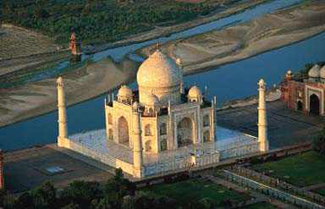
Visit the Taj Mahal, the eternal symbol of love built in 1631 by Emperor Shah Jahan in memory of his wife Mumtaz Mahal, completed over 22 years. Continue to Agra Fort, begun by Emperor Akbar in the late 16th century—more a walled royal city than a fort—constructed in red sandstone and adorned with white marble inlays. End with a visit to Sikandra, the tomb of Emperor Akbar, completed in 1613 by his son Jahangir.
Overnight Hotel – Agra (B)
Day 07: Agra – Jaipur (by surface)
After breakfast, drive to Jaipur. En route, visit Fatehpur Sikri, the former capital of the Mughal Empire during Akbar’s reign (1571–1585). Abandoned due to water scarcity, it remains a perfectly preserved “ghost city.” Visit the Royal Residential Complex, Jama Masjid, and the tomb of Sufi saint Salim Chishti.
Continue to Jaipur, a city celebrated for its rich cultural heritage and royal legacy. Founded in 1728 by Maharaja Sawai Jai Singh II, Jaipur is the world’s only city designed on the principles of the ancient Hindu mandala, representing nine divisions of the universe.
Optional – Chokhi Dhani:
You may enjoy an evening excursion to Chokhi Dhani, an ethnic village resort 15 km from Jaipur, offering traditional Rajasthani entertainment, folk performances, and local cuisine. Later, drive back to the hotel.
Overnight Hotel – Jaipur (B)
Day 08: Jaipur
This morning, enjoy an excursion to Amber Fort, an impressive palace complex begun under Raja Man Singh. Ascend the fort on an elephant (subject to availability), a memorable experience.
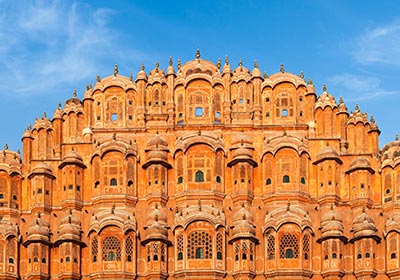
Later, visit the City Palace, a remarkable blend of Rajasthani and Mughal architecture. The central structure, Chandra Mahal, rises seven stories and offers splendid views of the gardens and city. Explore Jantar Mantar, the renowned 18th-century astronomical observatory with instruments that provide accurate readings even today. Finally, see the iconic Hawa Mahal (Palace of Winds), built in 1799 with 593 lattice windows that allowed royal women to observe street life unseen.
Overnight Hotel – Jaipur (B)
Day 09: Jaipur – Delhi and Departure
Drive back to Delhi International Airport to board your onward flight.
Our tour concludes: Caper thanks you for your patronage and looks forward to serving you again in the near future.